
What is a geobag? Uses, advantages, and limits
What a geobag does, where it is used, its advantages and limits, and how filled bags differ from geotextile tubes for erosion control and dewatering.
 Indramas Insight
A geobag is a geotextile bag filled with sand or soil, closed, and stacked to protect coasts, riverbanks, and slopes from erosion. Its fabric confines the fill while allowing water to pass through openings between the fibers.
Stacked bags form revetments (protective facings on banks or slopes) and low retaining structures. Choosing a geobag involves both structural strength and filtration: the fabric and seams must hold the fill, and the openings must suit its particles.
In this article

How does a geobag work?
The crew fills each bag, closes or sews it, and places it according to the design. The bag acts as a flexible form: the fill expands the fabric, which holds the material together. The crew arranges the filled bags into the protective structure.
The filling and placement method belongs in the design. The fabric needs enough strength for the loads imposed during filling, and the seams need their own strength check.
What does a geobag do?
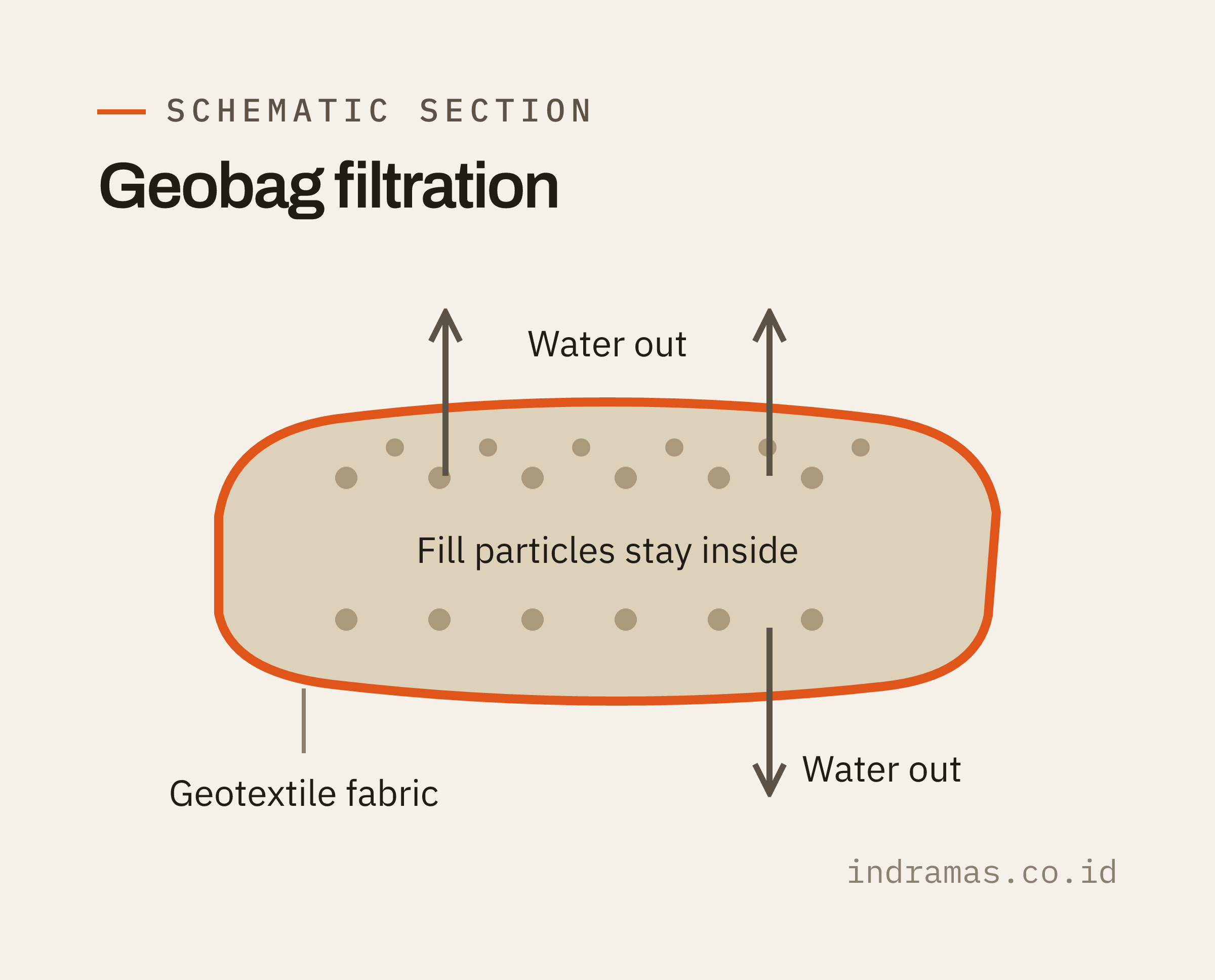
Confinement turns loose fill into a discrete unit. The fabric restrains the particles within the bag, while the bag arrangement forms the protective structure. The strength of the fabric and its seams holds that confinement.
Filtration lets water leave while retaining the fill. It depends on matching the fabric openings to the particle sizes, together with enough permeability, or ability to transmit water.
Separation keeps the bag’s fill apart from the surrounding material and limits direct mixing. These functions work together: a geobag needs to retain its shape and contents while continuing to let water through.
Where are geobags used?
Geobags are used for erosion control on coasts, riverbanks, and slopes. Revetments use an arrangement of bags as surface protection. Low retaining structures use stacked filled units as a gravity structure, relying on their weight.
Temporary uses include cofferdams, which form temporary barriers to water, and flow diversions.
For erosion control, sand or gravel is the usual fill in geotextile bags, containers, and tubes. Dewatering serves a different purpose: removing water from fine dredged sediment or sludge. The two uses therefore need different filtration.
What are the advantages of geobags?
Uses local fill
Geobags turn nearby sand or soil into construction units. Where suitable fill is available and rock or concrete is far away, this offers an economical option by reducing material brought to the site.
Flexible before filling
Empty bags are flexible and manageable for construction crews to handle. Flexible forming systems still need specific handling techniques. Filled bags are heavy, so there are two options: fill a bag first and move it into place, or place it empty and fill it where it will stay.
Takes the shape the design needs
The expanded fabric defines the filled unit’s shape. Separate units give scope to arrange bags along a bank or slope, or stack them into a low retaining structure.
Works above and below water
Geobags work above ground and underwater. During underwater filling, incoming material displaces water through the fabric. Where access is difficult, the crew can position an empty bag first and fill it in place.
What are the limitations of geobags?
Prolonged sunlight weakens the fabric
Ultraviolet (UV) light in prolonged sunlight can destroy geotextile strength, especially under strong tropical sun. UV stabilization improves durability, but its protection is finite.
Bags stay in their protective packaging and covered storage until they are needed. Once a package is opened, its bags are filled and placed promptly, and unused bags stay protected. Where the design permits, a soil cover protects the completed system; exposed bags need UV resistance considered in material selection.
Seams need a separate strength check
Seams can limit the strength of a filled bag. Seam strength is checked separately from fabric strength against filling loads, especially where pumping is involved. In geotextile tubes, the seams are the weaker element and need particular attention.
Fabric openings must suit the fill
Openings that are too large allow excessive fill loss. Insufficient water flow or excessive clogging restricts drainage. The right fabric retains particles while letting water pass, and that match is rechecked if the proposed fill changes.
Rough handling and exposure can damage the fabric
Rough handling and installation can damage the fabric. Exposed bags are also vulnerable to accidental or intentional damage. Suitable handling methods reduce that risk, as does a soil cover where the design allows it.
How is a geobag different from a geotube?
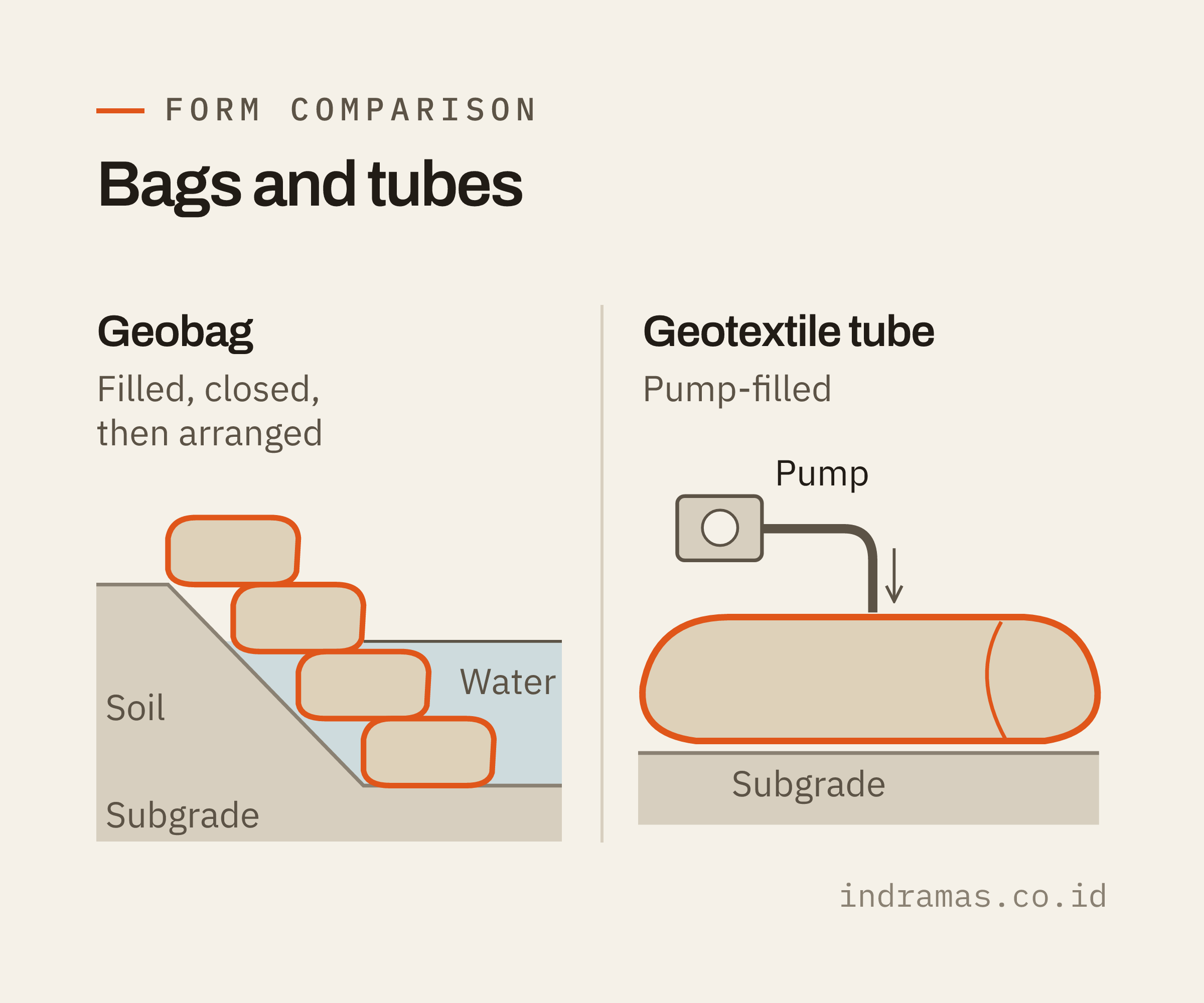
A geobag forms an individual unit for stacking or arranging. A geotextile tube is a long fabric tube filled by pumping material into it. Geotube is a product name; geotextile tube describes the category.
Sand-filled tubes serve coastal erosion-control work, including the applications described for GEOTUBE Marine. Tubes also contain dredged sediment and sludge for dewatering, as described for GEOTUBE Dewatering Containers. In dewatering, water passes out through the fabric while solids remain inside.
Pumping needs control to stay within the strength of the fabric and seams. Dewatering time also depends on the sediment layer that builds up inside the fabric, called the filter cake.
What to check before using geobags
Choosing bags starts with the intended protection, fill, fabric openings, water passage, and fabric and seam strength. The work plan also covers filling, placement, protected storage, and protection against sunlight and mechanical damage.
For advice on using geobags, you can contact Indramas, which supplies Terrabag geobags and supervises their filling and placement.